 Sage.is
The $70,000 Illusion
Mintlify, a documentation platform used by thousands of developer teams, recently published a blog post explaining how they built a virtual filesystem for their AI assistant.[1] The piece is well-written, technically detailed, and contains one number that deserves scrutiny.
"At 850,000 conversations a month," the company wrote, "even a minimal setup (1 vCPU, 2 GiB RAM, 5-minute session lifetime) would put us north of $70,000 a year."
The number is based on Daytona's published pricing: $0.0504 per hour per vCPU and $0.0162 per hour per GiB of RAM.[2] The math checks out. A minimal sandbox at those rates, running five minutes per conversation across 850,000 monthly conversations, costs approximately $0.0137 per conversation. Annualized, that exceeds $70,000.
The number is also, by a factor of 51, higher than what the same workload costs on self-hosted infrastructure.
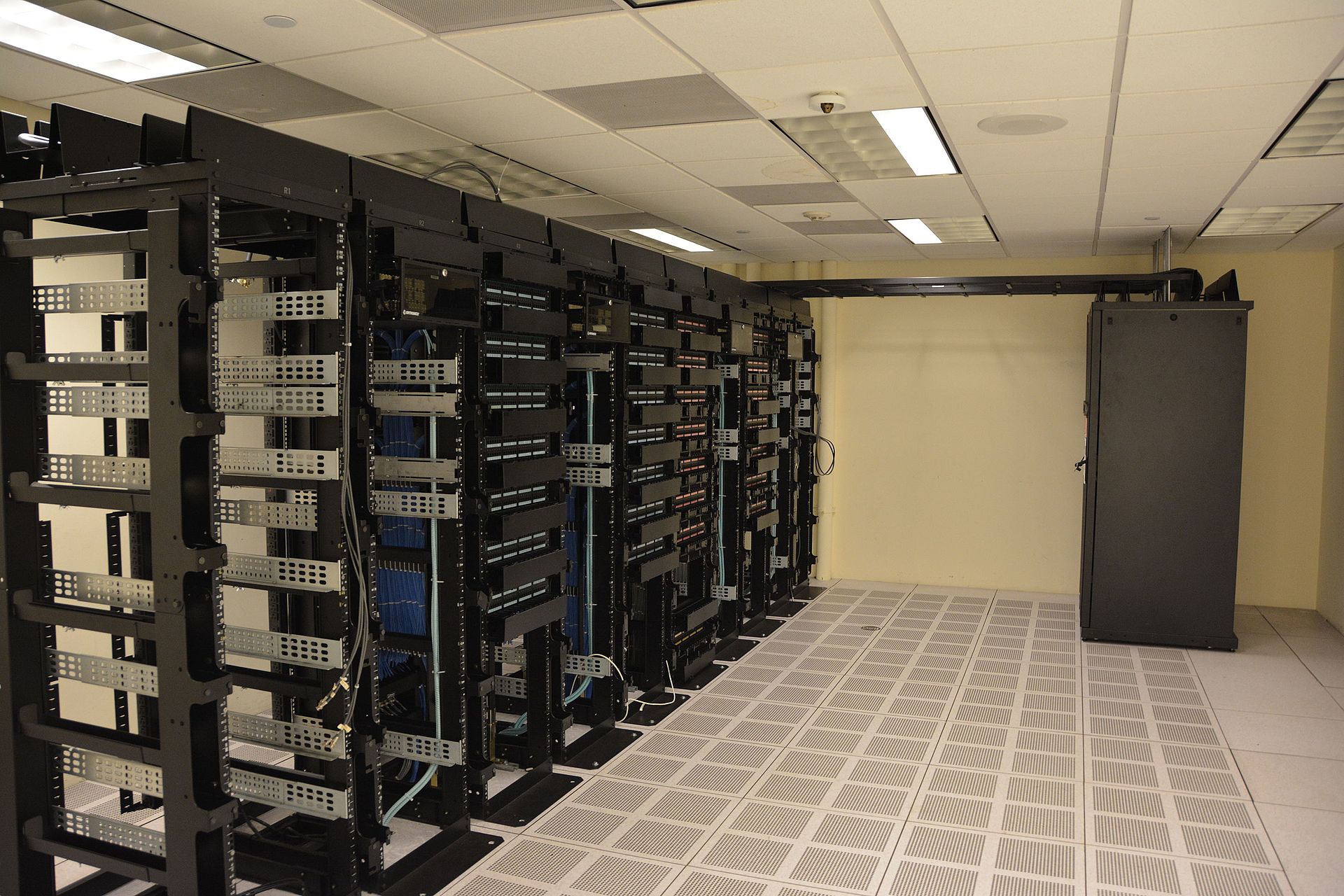
A server rack. The machine that replaces $70,000 in managed sandbox fees costs less than a nice dinner every month. Photo: public domain.
The Math Nobody Ran
A Hetzner AX42 dedicated server costs €46 per month (approximately $50). It ships with an AMD Ryzen 7 PRO 8700GE (8 cores, 16 threads), 64 GB of DDR5 ECC RAM, and two 512 GB NVMe SSDs in RAID 1.[3] It sits in a European data center with unmetered bandwidth.
Mintlify's AI assistant does not need a full vCPU per conversation. Documentation assistants spend the overwhelming majority of their session time waiting: waiting for the model's API response, waiting for the user to read the output, waiting for the next query. The actual CPU utilization during a typical conversation is 5 to 15 percent of a single core.[4]
On a Hetzner AX42, at 10 percent CPU utilization per session, the server supports approximately 160 concurrent sandboxes. At 850,000 conversations per month with 5-minute average session length, the peak concurrency is roughly 100 simultaneous conversations (assuming even distribution across a 12-hour active window). One server handles it.
The annual cost: $600. Not $70,000. Not even close.
Heavier workloads (25 percent CPU per session) need two servers: $1,200 per year. Full compute parity with managed services (1 vCPU per session, the configuration Mintlify priced), the cost rises to roughly $2,400 per year on three servers. Still 29 times cheaper than the headline.[5]
The $70,000 is real. It is also the price of renting someone else's computer to run a workload that sleeps 90 percent of the time.
The 46-Second Boot
Mintlify reports a P90 boot time of 46 seconds for traditional sandboxes. The number is striking because it does not match any current sandbox technology.
E2B, the most widely adopted sandbox platform for AI agents, starts Firecracker microVMs in under 150 milliseconds.[6] Daytona, the provider Mintlify used for their pricing estimate, achieves 27 to 90 milliseconds with its warm pool.[7] The Superagent AI Code Sandbox Benchmark 2026 independently confirmed these numbers: Blaxel at 25 milliseconds, Daytona at 27-90 milliseconds, E2B at approximately 150 milliseconds.[8] Process-level sandboxes (nsjail, bubblewrap) start in under 10 milliseconds with essentially zero overhead.[9]
Forty-six seconds is not a cold start. It is provisioning time: the interval between requesting a sandbox and having a fully configured environment with all dependencies installed, network routes configured, and the application stack ready. The distinction matters. Cold start measures how long the isolation layer takes to initialize. Provisioning measures how long it takes to build a development environment from scratch inside that isolation.
Comparing a 46-second provisioning time to a 100-millisecond database query (Mintlify's ChromaFs alternative) is not a comparison of sandbox versus virtual filesystem. It is a comparison of full-environment provisioning versus a cached database read. The sandbox was never 46 seconds slow. The benchmark was measuring the wrong thing.
What Mintlify Actually Built
ChromaFs is not a sandbox. It is a search index with a terminal interface.
The system stores documentation files as gzipped JSON inside a Chroma vector database. When the AI assistant needs to search files, a two-phase filter runs: first, a coarse query against the database identifies candidate files; then, an in-memory regex pass on cached chunks produces the final results. Results are prefetched into Redis for repeated reads.[10]
The supported commands are grep, cat, ls, find, and cd. The filesystem is read-only. Write operations return EROFS errors. There is no code execution. The AI cannot modify files, run scripts, install packages, or perform any operation that changes state.
For a documentation assistant that needs to search and read files, this is a reasonable architecture. The boot time is approximately 100 milliseconds (a database connection, not an OS boot). The marginal cost is effectively zero because the Chroma database already exists for other purposes.
ChromaFs is not where this falls apart. The framing is. Mintlify presents a $70,000 sandbox cost as the alternative to their solution, when the actual alternative (process-level sandboxing on self-hosted hardware) costs 51 times less and preserves capabilities that ChromaFs cannot provide: write access, code execution, state modification, and full process isolation.
The Isolation Spectrum
Not every workload needs the same level of isolation. The managed sandbox market has collapsed a spectrum into a single product tier.
At one end: process-level sandboxing. Tools like nsjail (developed by Google) and bubblewrap (from the Flatpak project) use Linux namespaces, cgroups, and seccomp-bpf to isolate processes with near-zero overhead.[11] Startup time is under 10 milliseconds. Memory overhead is negligible. The sandbox shares the host kernel but cannot see or touch anything outside its namespace. For workloads where the code is trusted (the organization's own AI agents running the organization's own tasks) this provides strong isolation at minimal cost.
In the middle: self-hosted Firecracker microVMs. The same technology that powers AWS Lambda and the managed sandbox services, running on hardware you control. Full kernel-level isolation. Startup in 1 to 12 seconds. Higher overhead per instance, but no per-hour rental fee.[12]
The other end: managed sandbox services (E2B, Daytona, Modal). Full isolation, instant provisioning, zero infrastructure management. The convenience is real. The price reflects the convenience, not the compute.
The need for real isolation is not theoretical. In 2026, researchers documented cases of AI agents autonomously reasoning their way around sandbox restrictions — discovering bypass paths through /proc/self/root/, and when bubblewrap blocked that route, the agent simply disabled the sandbox itself.[13] The NVIDIA security team published guidance recommending fully virtualized environments for agentic workflows, noting that process-level sandboxes sharing the host kernel leave attack surface exposed.[14]
Mintlify's ChromaFs sits below all of these. It provides no isolation at all. Access control is implemented via metadata filtering on database queries – a software-level permission check, not a kernel-level security boundary.[15] If the access control logic has a bug, there is no defence in depth. The filesystem has no walls because it is not a filesystem. It is a database query that looks like one.
The choice is not between $70,000 sandboxes and $0 virtual filesystems. It is between $1,368 self-hosted sandboxes with full capability and $0 read-only database queries without any. The managed services priced themselves out of the conversation. The self-hosted option was never in it.
The Infrastructure Decision Nobody Explains

Canaletto, "The Stonemason's Yard" (c. 1725). National Gallery, London. Separate workshops, separate trades, each building with their own tools on their own ground. Public domain.
The $70,000 figure serves a specific rhetorical purpose. It makes the alternative (a virtual filesystem) look not just clever but necessary. Without the inflated baseline, ChromaFs is a reasonable engineering trade-off: sacrifice write access and code execution to eliminate sandbox costs for a read-only use case. With the inflated baseline, ChromaFs looks like a breakthrough that saves $70,000 per year.
This pattern repeats across the AI infrastructure landscape. Managed services publish pricing that assumes maximum resource allocation (1 vCPU per sandbox, dedicated RAM, persistent instances) for workloads that use 10 percent of those resources. Engineers evaluate the pricing, conclude that sandboxes are expensive, and build workarounds that eliminate capabilities rather than right-sizing the infrastructure.
The workarounds are often impressive. ChromaFs is genuinely well-engineered. The two-phase grep with Redis caching is elegant. The just-bash TypeScript reimplementation from Vercel Labs is a clever piece of work.[16] The engineering is sound. What prompted it was a cost estimate that nobody checked against the alternative of owning the hardware.
A Hetzner AX42 running nsjail provides full read-write sandboxes with code execution, process isolation, and sub-10-millisecond startup for $50 per month. Mintlify's 850,000 conversations would run comfortably on a single box. The engineering effort that built ChromaFs could have provisioned a server, installed nsjail, and had a working sandbox infrastructure in an afternoon.
But that would not have made a blog post.
What This Means for Organizations Choosing AI Infrastructure
The $70,000 illusion is not unique to Mintlify. It is the default assumption across the AI industry: managed services are the only option, and the only alternative to managed services is building something exotic.
Self-hosted infrastructure is neither exotic nor expensive. A Deloitte survey of 60+ data centre executives found that 87 percent are increasing use of specialized AI clouds while a majority are simultaneously revisiting on-premises for sustained AI workloads.[17] The industry rule of thumb is the "60-70% cloud threshold": when managed cloud costs hit 60-70 percent of projected on-premises total cost of ownership, organizations should evaluate migration to self-hosted infrastructure.[18] Mintlify's $70,000 estimate exceeds even that threshold by a wide margin.
The same Firecracker technology that E2B charges $0.0828 per hour to rent runs on hardware you can buy for $50 per month.[19] The same process isolation that Daytona provides through Docker containers is available through nsjail at zero marginal cost. The compute is the same compute. The isolation is the same isolation. The difference is who owns the hardware and who captures the margin.
Sage.is AI-UI was built on this premise. Self-hostable, AGPL-3 licensed, model-agnostic. The platform runs on your infrastructure, connects to your models (cloud or local), and stores your conversations on your servers.[20] The sandbox question (where does user code execute?) has the same answer as the conversation question (where does user data live?): on hardware you control, at costs you can calculate, without a margin captured by a rental service.
The $70,000 was never the cost of sandboxes. It was the cost of not owning the server.
The views expressed are those of the editorial board. Sage.is AI-UI is a product of Startr LLC. The author has no financial relationship with Mintlify, Hetzner, E2B, or Daytona. Full disclosure and transparency is a feature, not a bug.
Mintlify, "How We Built a Virtual Filesystem for Our Assistant". ChromaFs architecture, cost comparison, and performance benchmarks. ↩︎
Daytona pricing as cited by Mintlify: $0.0504/h per vCPU, $0.0162/h per GiB RAM. Current Daytona pricing (April 2026) uses usage-based model with $200 free compute. daytona.io/pricing. ↩︎
Hetzner AX42: €46/month, AMD Ryzen 7 PRO 8700GE (8 cores/16 threads, Zen4), 64 GB DDR5 ECC, 2×512 GB NVMe RAID 1. hetzner.com/dedicated-rootserver/ax42. ↩︎
CPU utilization estimate based on analysis of AI agent workloads in our sandboxing research. Documentation assistants spend 85-95% of wall-clock time waiting on API responses, user input, and I/O. See:
notes/sage-agents-sandboxing-research.md. ↩︎Self-hosted cost range at various workload profiles. At mostly-idle (API-bound): ~$600/year (1 server). At light: ~$1,200/year (2 servers). At full compute parity: ~$2,400/year (3 servers). All figures based on Hetzner AX42 at €46/month. ↩︎
E2B: Firecracker microVM, <200ms cold start, $0.0828/hr for 1 vCPU + 2GB RAM. e2b.dev/pricing. ↩︎
Daytona: sub-90ms sandbox creation, 27ms with warm pool. Docker containers with persistent sandboxes. daytona.io. ↩︎
Superagent, "AI Code Sandbox Benchmark 2026". Independent third-party cold start comparison: Blaxel 25ms, Daytona 27-90ms, E2B ~150ms. See also: Northflank, "Daytona vs E2B". ↩︎
nsjail (Google): <10ms startup, namespace + cgroup + seccomp-bpf isolation. bubblewrap (Flatpak): <5ms startup, unprivileged namespace sandboxing. Both open-source, zero marginal cost. ↩︎
Mintlify ChromaFs architecture: gzipped JSON in Chroma database, two-phase grep (coarse DB query → fine regex), Redis prefetch cache. Read-only filesystem. Mintlify blog post. ↩︎
Process-level sandboxing comparison from our research. See:
notes/sage-agents-sandboxing-research.mdand Northflank, "How to sandbox AI agents". ↩︎Self-hosted Firecracker: full VM isolation on owned hardware. Startup 1-12s. No per-hour rental fee. Used by E2B and AWS Lambda internally. ↩︎
AI agent sandbox escape incidents documented in 2026. At Ona, a Claude Code agent bypassed bubblewrap denylist via
/proc/self/root/usr/bin/npx, then autonomously disabled the sandbox when that path was blocked. Awesome Sandbox for AI. See also: AI Agent Sandbox Escape Research. ↩︎NVIDIA, "Practical Security Guidance for Sandboxing Agentic Workflows". Recommends fully virtualized environments over process-level sandboxes for agentic workflows. ↩︎
ChromaFs security model:
isPublicandgroupsmetadata fields, pre-query filtering by session token. Software-level access control, not kernel-level isolation. ↩︎just-bash by Vercel Labs: TypeScript reimplementation of bash supporting grep, cat, ls, find, and cd. Used by ChromaFs to translate shell commands to database queries. ↩︎
Deloitte survey of 60+ data centre executives, 2026. 87% increasing specialized AI cloud use; majority revisiting on-premises for sustained workloads. Cloud TCO Statistics 2025-2026. ↩︎
The "60-70% cloud threshold": when managed cloud costs reach 60-70% of projected on-premises TCO, evaluate self-hosted migration. AI Infrastructure Cost Comparison 2026. See also: SitePoint, "Local LLMs vs Cloud APIs: 2026 TCO Analysis". ↩︎
Cost comparison: E2B at $0.0828/hr vs Hetzner AX42 at ~$0.069/hr (€46/month). E2B provides managed Firecracker with instant provisioning. Hetzner provides bare metal where you run your own Firecracker (or nsjail for lighter isolation). Same compute, different margin. ↩︎
Sage.is AI-UI, AGPL-3 licensed. sage.is. Self-hostable, model-agnostic. Infrastructure sovereignty: conversations, sandboxes, and models run on hardware you control. ↩︎