 Sage.is
On a Monday morning in early March 2026, Alex sat at their desk and composed an email to a man they had met at a birthday party. The man was co-founder of a company that builds encrypted file synchronization software for organizations that will not trust their data to American cloud providers. The party had been at his cousin's place. The conversation had been about AI.
Alex and their partner Isabelle created Sage.is AI-UI, an open-source AI platform licensed under the GNU Affero General Public License, version 3. Sage is self-hosted. The file sync tool is self-hosted. Both products exist because some organizations believe their data should stay in the building. The email Alex was writing proposed something specific: lightweight connectors, built on a protocol called MCP, that would let Sage search and work with locally-synced encrypted files without either tool compromising its architecture.
They knew what the first question would be. Not about the technology. Not about the user experience. The first question is always about the license.
"If your platform is AGPL," the question goes, "doesn't that mean any tool that connects to it has to become AGPL too?"
The answer is no. It has always been no. But the misconception has survived longer than most software.
THE MISCONCEPTION
Over a decade ago in 2010, Google published an internal policy that prohibited the use of AGPL-licensed software across the company.[1] The reasoning was straightforward: Google runs virtually everything as a network service, and the AGPL's Section 13 requires anyone who modifies AGPL code and deploys it as a network service to make the modified source available to users. For a company valued at over $2 trillion whose entire business model depends on proprietary modifications to open-source infrastructure, this is an existential constraint. Google's ban was rational, narrowly tailored, and entirely specific to Google's architecture.
Then the rest of the industry copied it.
Heather Meeker, an expert on open-source licensing, a general partner at OSS Capital, and the author of Open Source for Business (the standard reference for enterprise attorneys), has spent two decades correcting the resulting confusion. "The single most significant misconception about copyleft licenses," wrote Meeker, "is caused by the use of the word 'viral.'"[2] The metaphor implies that copyleft spreads through contact, infecting any code that touches it. There is no legal mechanism by which this occurs. If you violate the AGPL, the copyright holder has legal remedies. Your proprietary code does not spontaneously change its license. The word "viral" is a metaphor. The fear it produces is real. The legal basis for the fear is not.
The specific misconception that matters for tool interoperability is this: if Application A communicates with an AGPL-licensed Application B over a network protocol, Application A must also be licensed under AGPL. The Free Software Foundation, which wrote the AGPL in November 2007, addressed this directly in its GPL FAQ: "Pipes, sockets, and command-line arguments are communication mechanisms normally used between two separate programs."[3] Separate programs communicating over standard interfaces do not form a single combined work. The copyleft does not cross the pipe.
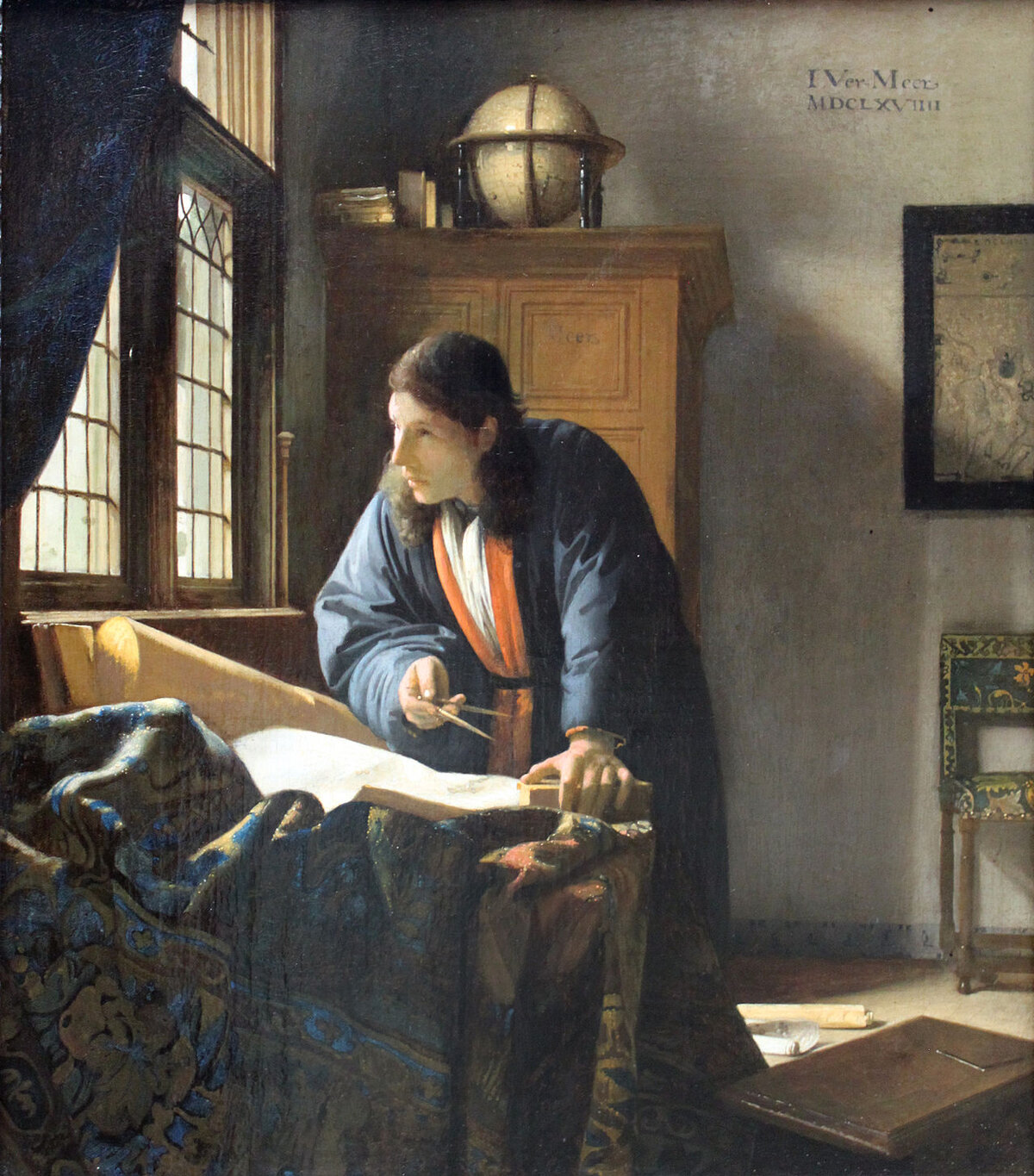
Johannes Vermeer, "The Geographer" (c. 1668–69). Stadel Museum, Frankfurt. A man studying the world through instruments and maps, alone in his room. The map is not the territory. The policy is not the license. Public domain.
Google banned AGPL because Google's architecture makes compliance expensive. The rest of the industry adopted the ban because reading a policy is easier than reading a license. The result is a generation of enterprise legal departments that treat the three most important letters in open-source licensing as a wall, when the license itself is a gate.
The AGPL does not prevent tools from talking to each other. It prevents companies from taking open-source code, modifying it, deploying it as a service, and keeping the modifications secret. These are not the same thing.
THE PROTOCOL
In November 2024, Anthropic released the Model Context Protocol, an open standard for connecting AI applications to external tools and data sources.[4] The design was straightforward: a host application (the AI platform) launches MCP servers as separate processes. Communication happens over JSON-RPC 2.0, a standard request-response format, transported via stdio for local connections or HTTP with server-sent events for remote ones. No shared memory. No dynamic linking. No library calls. Two programs talking through a pipe.
The inspiration was explicit. MCP's architecture mirrors the Language Server Protocol, which standardized how code editors communicate with programming language tools in the 2010s. Before LSP, every editor had to build custom integrations for every language. After LSP, one protocol served them all. MCP applies the same principle to AI: one protocol for connecting any AI platform to any external tool.
Within twelve months, the ecosystem grew at a pace that made the protocol's dominance difficult to dispute. OpenAI adopted MCP in March 2025 across its Agents SDK, Responses API, and ChatGPT desktop application.[5] Google DeepMind confirmed MCP support for Gemini the following month.[6] Microsoft and GitHub joined the MCP steering committee at Build in May 2025.[7] By the protocol's first anniversary, the ecosystem had reached 97 million monthly SDK downloads, more than 5,800 MCP servers, and over 300 MCP clients. Twenty-eight percent of Fortune 500 companies had implemented MCP servers in their AI stacks.[8]
Doug McIlroy, the Bell Labs mathematician who invented Unix pipes in 1973, wrote the principle that MCP operationalizes half a century later. "Write programs that do one thing and do it well," wrote McIlroy. "Write programs to work together."[9] The Unix pipe connected grep to sort to uniq without any of them knowing or caring about each other's internals. MCP connects an AI platform to a file sync tool, a database, a search engine, or any other service with the same architectural indifference. The programs are separate. The protocol is the seam.
The legal implication follows directly from the technical architecture. MCP communication between an AGPL-licensed AI platform and a proprietary file sync tool is communication between two separate programs via standard inter-process channels. Under the FSF's own analysis, this does not create a combined work. The copyleft of the AI platform does not extend to the file sync tool. Each program retains its own license. Each company retains its own code. The protocol is the bridge, not the merger.
THE LOCKED TOOLBOX
Google's AI works with Google's tools because Google wrote both. Gemini accesses Google Drive, Google Classroom, Google Docs, and Google Meet not because of an open protocol, but because they share a codebase, an authentication system, and a data layer. The integration is seamless. The portability is nonexistent. A teacher who builds a semester of AI-assisted lesson plans inside Google's ecosystem cannot move those plans to a non-Google environment without manually recreating every one.
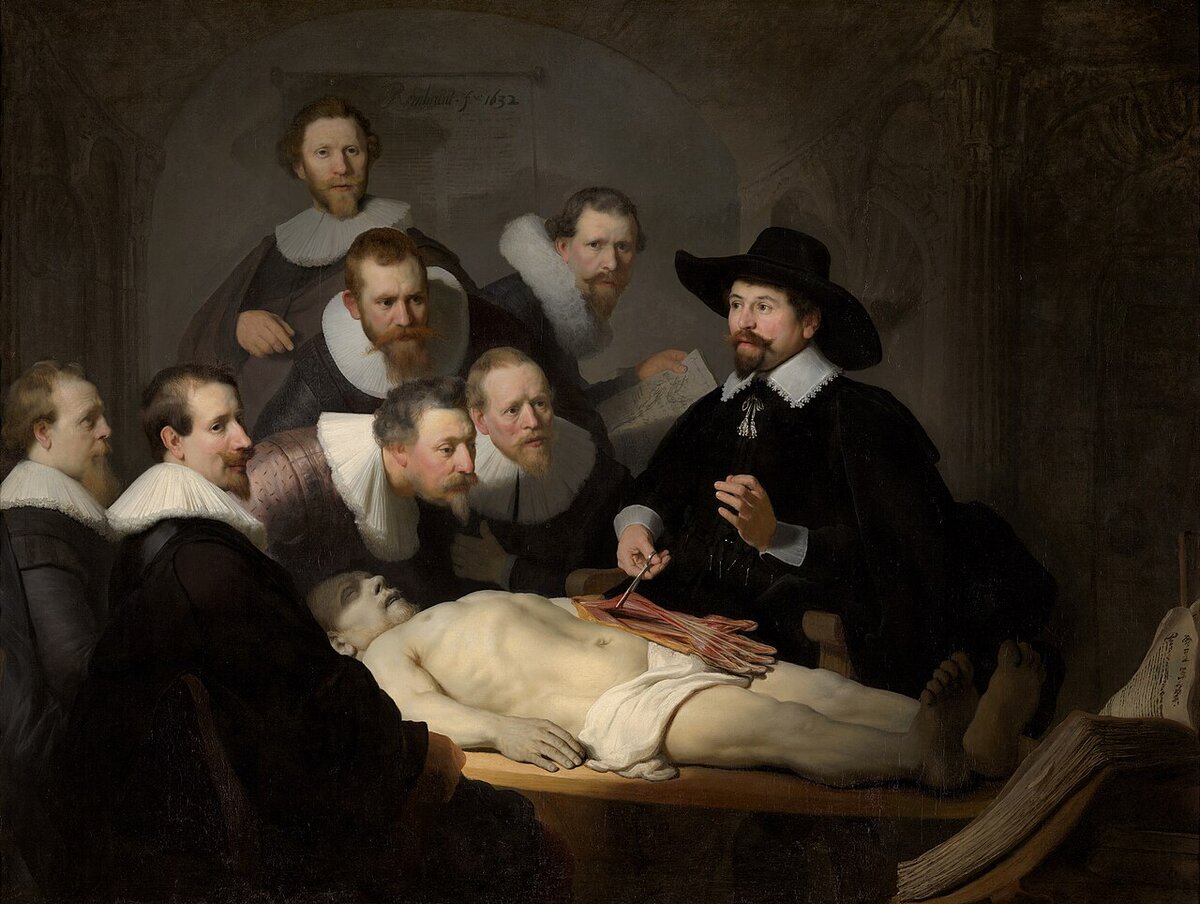
Rembrandt van Rijn, "The Anatomy Lesson of Dr. Nicolaes Tulp" (1632). Mauritshuis, The Hague. Seven observers, one subject, each bringing a different lens. The lesson requires the separation of roles: the surgeon does not become the body. The tool does not become the platform. Public domain.
Microsoft runs the identical play. Copilot inside Teams, which connects to OneDrive, which connects to Outlook, which connects to OneNote. The integration is proprietary. The interoperability is internal. Neither company has any incentive to make its AI work with tools it does not own, because the AI is the lock that keeps users inside the ecosystem. "The Walled Garden" documented this dynamic in detail: the wall is not the price. The wall is the topology.
For every tool that is not Google or Microsoft, interoperability requires a different path. Before MCP, the options were grim: build a custom integration for each AI platform (expensive, fragile, non-portable), or accept that your tool would never participate in an AI workflow. Privacy-first tools faced the sharpest version of this problem. They cannot rely on a cloud platform to do the wiring. They have no shared data layer. They are designed, by architecture and by philosophy, to be separate.
MCP changes the calculation. It provides the interface that Google provides by owning everything, but through a protocol that anyone can implement without asking permission, paying a license fee, or surrendering control. The protocol is open. The specification is published. The reference implementations are MIT-licensed. Any tool can speak MCP, regardless of its own license, regardless of its creator, regardless of whether Google approves.
Google's tools work together because Google owns them all. Privacy-first tools work together only if someone builds a bridge that respects the property lines. The bridge is a protocol. The property lines are the point.
THE GERMAN VAULT
The company was founded in Hamburg in 2008. The product is deceptively simple: file synchronization with zero-knowledge encryption. Keys are generated locally on the user's device. They are never transmitted to the company's servers. Neither the company's administrators nor its infrastructure can read the files they store and sync. The company processes data exclusively within the Federal Republic of Germany, under German and EU data protection law.
The customer base is the predictable consequence of this architecture. Law firms that handle privileged communications. Hospital systems bound by patient confidentiality. Tax consultancies managing financial records under professional secrecy obligations. Government agencies. German Mittelstand manufacturers with engineering IP they will not place on servers subject to the U.S. CLOUD Act.[10] The company reports more than 500,000 installations and over 5,500 corporate customers.
These customers share a profile that extends beyond file sync. They are organizations that will not use Google Drive, will not use OneDrive, will not use Dropbox, and will not use any AI tool that routes their queries through a cloud provider's servers. They need AI that runs where their files are. They need an AI platform deployed on their own infrastructure, working with documents that have already been synced locally by the file sync tool, producing outputs that never leave the building.
This is the integration that Isabelle proposed in her email. An MCP connector that lets Sage AI-UI index and search locally-synced encrypted content. The AI reads the local files. The files never leave the machine. The zero-knowledge encryption is not bypassed: the MCP connector works with the decrypted copies that the file sync tool has already synced to the user's device. The search results stay local. The AI's responses stay local. Two programs, two companies, two licenses, two countries, one protocol.
The company is shipping full-text search on encrypted indices in early 2026. When that capability reaches their customers, the next question will be immediate and inevitable: can we do AI on this data? The architecture that answers that question without sending the data to Mountain View, Redmond, or San Francisco already exists. It is a bridge, not a merger. And the AGPL license on one side of the bridge does not infect the proprietary encryption on the other, for the same reason that grep does not change the license of the file it reads.
THE SOVEREIGN STACK
The company is not alone on its side of the Atlantic. Europe has built an ecosystem of privacy-first tools that solve individual problems exceptionally well and talk to each other barely at all.
Wire provides end-to-end encrypted messaging for enterprises and government agencies. Nextcloud offers self-hosted collaboration and file sharing; in November 2025, the company announced a 250 million euro investment in its "Sovereignty 2030" initiative, focused on giving organizations complete local control.[11] Hetzner provides European-hosted cloud infrastructure. The International Criminal Court in The Hague announced in late 2025 that it was replacing Microsoft Office with OpenDesk, an open-source office suite delivered by the German Centre for Digital Sovereignty.[12] The Gaia-X consortium, now in its implementation phase with more than 180 data spaces, is building a federated architecture for European cloud infrastructure designed to reduce dependence on American and Chinese providers.[13]
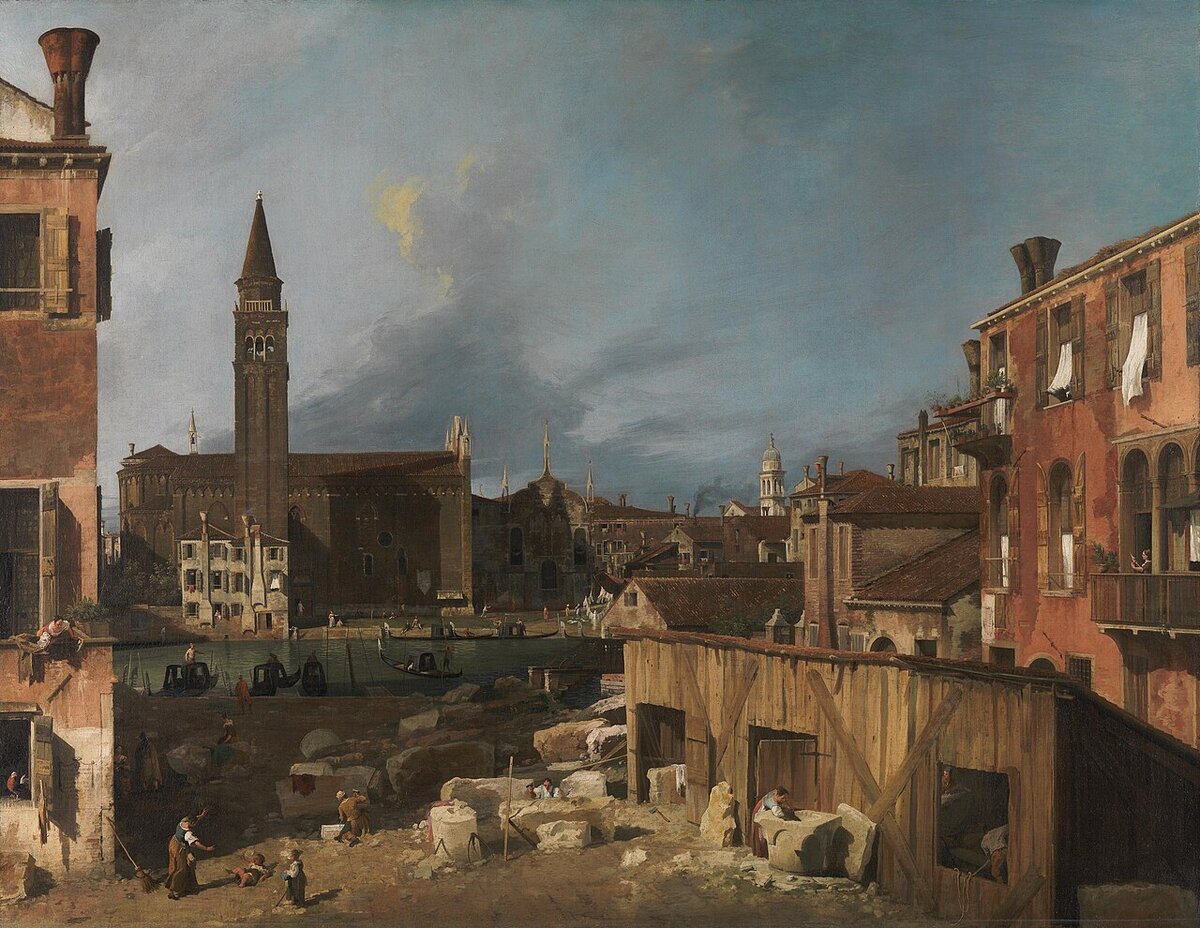
Canaletto, "The Stonemason's Yard" (c. 1725). National Gallery, London. Separate workshops, separate trades, separate masters, all building the same city. The cooperation is in the adjacency, not the merger. Public domain.
Each of these tools is a sovereign island. Wire does not talk to Nextcloud. Nextcloud does not talk to the file sync provider. None of them have a shared AI layer, because no AI platform has connected to them through a protocol they can trust, on infrastructure they control, under a license that guarantees the code cannot be closed behind them.
MCP is the missing connection. An MCP server for the encrypted file sync tool. An MCP server for Nextcloud. An MCP server for a local PostgreSQL database. An MCP server for a company's internal wiki. Each one a separate process, a separate program, a separate license. The AI platform connects to all of them through the same protocol, the same JSON-RPC messages, the same stdio transport. The AGPL on the AI platform does not propagate to the MCP servers, because they are separate programs communicating over standard inter-process channels. The proprietary license on the file sync tool does not propagate to the AI platform, for the same reason.
The sovereign stack is not a product. It is a topology: privacy-first tools composed through open protocols, each retaining its sovereignty, each contributing its capability, none surrendering its architecture. The tools already exist. The protocol already exists. The legal clarity already exists. What has been missing is the AI platform willing to sit at the center of this topology without trying to own it.
THE BRIDGE
The co-founder replied the same day. The tone was warm. He remembered the conversation with Alex. He was swamped with large projects (the encrypted full-text search launch) but wanted to reconnect in a month. He asked for teaser material in the meantime.
The teaser material is this: Sage.is AI-UI is an open-source AI platform, AGPL-3 licensed, self-hostable or managed, and model-agnostic. It connects to Claude, GPT, Gemini, Llama, Mistral, or locally hosted models through a single interface. Its MCP tool system supports any external integration that speaks the protocol. Its outputs are Markdown (editable, portable, versionable). Its conversation maps provide branching visual records of every interaction. It is built by Startr LLC, an 18-year-old company with zero venture capital and zero debt, whose business model is managed hosting and support, not data aggregation or exits.
The integration would work like this. A compliance officer at a German law firm opens Sage on her laptop. They ask the AI to find every contract in the locally-synced folder that mentions a specific liability clause. The MCP connector searches the locally synced files. The results appear in Sage's interface. The AI summarizes the relevant passages, flags potential conflicts, and generates a structured comparison in Markdown that the officer can open in any text editor, version in Git, or share with her colleagues through the encrypted sync. The files never left her machine. The file sync tool encrypted them in transit and at rest. Sage processed them locally. No cloud API was touched. No American server saw the data. No license was violated. No architecture was compromised.
This is what interoperability looks like when both tools are designed for privacy. Not a merger. Not an acquisition. Not a platform swallowing a feature. Two programs, built by two companies on opposite sides of the Atlantic, connected by a protocol that respects the property lines both companies drew.
The AGPL does not mean isolation. It means that the bridge is inspectable, the code is auditable, and the gate cannot be closed by a company that decides openness is no longer profitable. The license is not the wall. It is the guarantee that there will always be a gate.
THE LINE THAT CONNECTS
The Sage.Education editorial series has described walls ("The Walled Garden"), gates ("The Open Garden"), divides ("The Digital Divide, Revisited"), and red lines ("The Red Lines"). This article describes bridges.
Google builds bridges by owning both sides of the river. The interoperability is real. The sovereignty is gone. Microsoft builds bridges by the same method, with the same result. Both companies achieve integration by eliminating the boundary between tools, making everything one system, one codebase, one data layer, one vendor.
The MCP bridge works because it owns neither side. It is a protocol, a set of shared conventions that let sovereign programs cooperate without surrendering sovereignty. The AI platform keeps its license. The file sync tool keeps its encryption. The messaging app keeps its end-to-end guarantees. The protocol carries the request and the response. It does not carry the obligation.
The misconception that AGPL prevents this is the last wall. It is not a legal wall. It is a wall of misunderstanding, built from Google's internal policy, reinforced by an industry that finds it easier to copy a prohibition than to read a license, and sustained by the comfortable assumption that open-source tools must be islands because the license sounds scary.
The license is four pages long. The misconception will not survive reading them.
The protocol exists. The tools exist. The customers exist. The bridge is open.
The views expressed are those of the editorial board and do not necessarily reflect the positions of any institution mentioned. Sage.is AI-UI is a product of Startr LLC. Full disclosure and transparency is a feature, not a bug.
Google Open Source Policy, "AGPL Policy" (2010). Referenced in Chris DiBona's public statements and widely reported by Ars Technica and LWN.net. ↩︎
Heather Meeker, Open Source for Business (3rd ed., 2020). See also Meeker's blog posts on copyleft misconceptions at heathermeeker.com. ↩︎
Free Software Foundation, "Frequently Asked Questions about the GNU Licenses: What is the difference between an 'aggregate' and other kinds of 'modified versions'?" gnu.org/licenses/gpl-faq. ↩︎
Anthropic, "Introducing the Model Context Protocol," November 2024. modelcontextprotocol.io. ↩︎
OpenAI, "OpenAI adopts the Model Context Protocol," March 2025. Agents SDK, Responses API, and ChatGPT desktop integration. ↩︎
Google DeepMind, MCP support announcement for Gemini, April 2025. ↩︎
Microsoft and GitHub joined the MCP steering committee at Build 2025, May 2025. ↩︎
MCP ecosystem statistics at first anniversary (November 2025): 97M monthly SDK downloads, 5,800+ servers, 300+ clients. 28% Fortune 500 adoption per Anthropic reporting. ↩︎
Doug McIlroy, "Unix Philosophy" (1978). Originally in Bell System Technical Journal. The pipe operator was implemented in Unix v3, 1973. ↩︎
U.S. Clarifying Lawful Overseas Use of Data (CLOUD) Act, 18 U.S.C. § 2713 (2018). Permits U.S. law enforcement to compel disclosure of data stored by U.S.-headquartered providers regardless of server location. ↩︎
Nextcloud, "Sovereignty 2030" initiative announcement, November 2025. 250 million euro investment in local-control infrastructure. ↩︎
International Criminal Court adoption of OpenDesk, announced late 2025. OpenDesk delivered by the German Centre for Digital Sovereignty (Zentrum fur Digitale Souveranitat). ↩︎
GAIA-X European Association for Data and Cloud. Implementation phase with 180+ data spaces as of 2025. gaia-x.eu. ↩︎